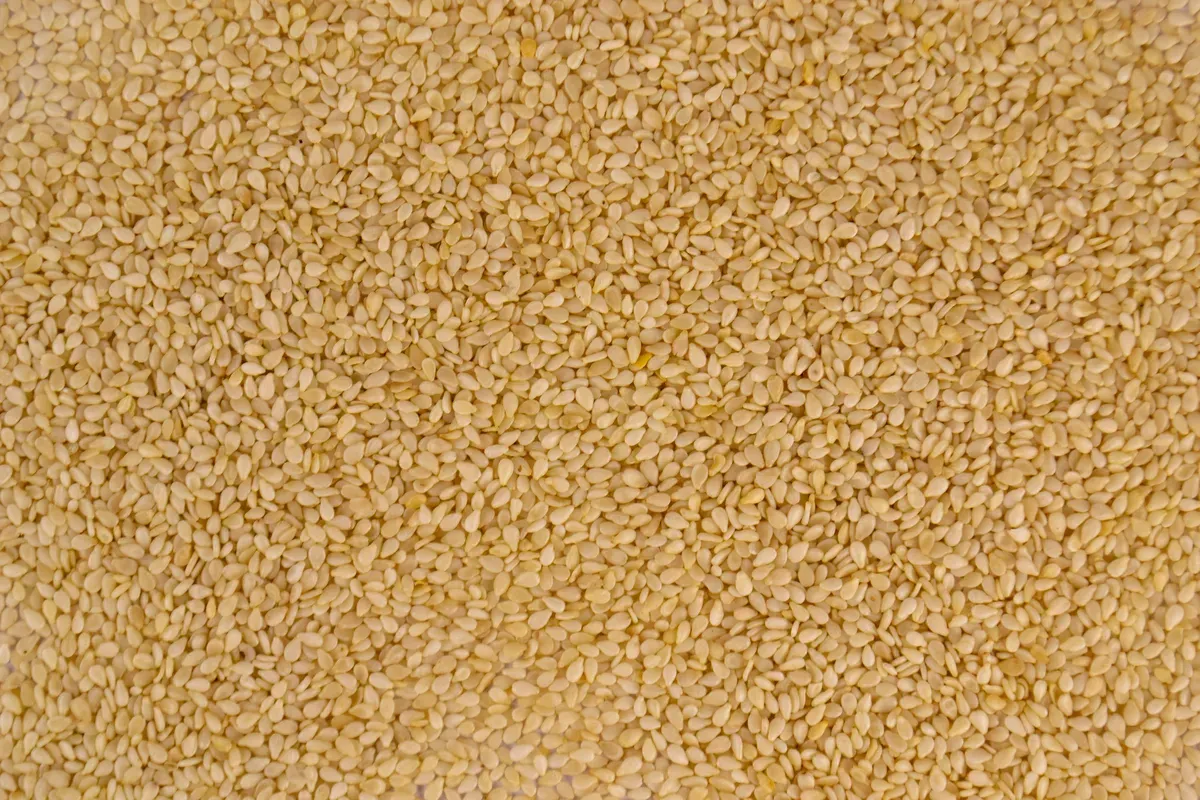
The Seed That Has Fed the World for Millennia
Sesame is one of humanity's oldest cultivated crops. It appears in ancient Egyptian records, in Mesopotamian trade routes, in Ayurvedic texts, and in the culinary traditions of virtually every culture that has ever pressed an oilseed or baked a flatbread.
Today it sits at the heart of some of the world's fastest-growing food categories — tahini, sesame oil, Middle Eastern cuisine, Asian cooking sauces, artisan bakery, and health food — and global demand for high-quality sesame seeds has never been stronger.
At Gadhiya Group, Natural White Sesame Seeds are one of our most significant agro export products. Sourced from India's primary sesame-growing regions, cleaned and sorted to international commodity standards, and exported with full compliance documentation to buyers across the Middle East, Europe, North America, Asia, and beyond.
What Makes Natural White Sesame Commercially Significant
Not all sesame seeds are equal. Colour, purity, oil content, and moisture control determine quality — and in a commodity where the end product (tahini, sesame oil, or bakery topping) reflects the raw material directly, these parameters matter enormously.
| Quality Parameter | Gadhiya Group Natural White Sesame | Industry Baseline |
|---|---|---|
| Purity | 99–99.5% (sortex cleaned) | 98–99% |
| Moisture content | Max 6% | Max 7–8% |
| Oil content | 48–52% | 44–50% |
| FFA (Free Fatty Acids) | Max 1–1.5% | Max 2% |
| Foreign matter | Nil (multi-stage cleaned) | Max 0.1–0.5% |
| Colour | Bright natural white, uniform | Variable |
| Admixture | Max 0.1–0.5% | Max 1–2% |
These are not incremental differences. For tahini producers, a higher FFA level means faster rancidity development in the finished paste. For sesame oil processors, lower oil content means lower extraction yield. For bakery manufacturers, inconsistent colour means inconsistent finished product appearance. The numbers in the table above translate directly into your product quality and your production economics.
India's Sesame Belt: Where Gadhiya Group Sources
India is one of the world's leading sesame producers — and the states of Gujarat, Rajasthan, Madhya Pradesh, and Andhra Pradesh are where the finest natural white sesame is grown. The semi-arid climate, well-drained soils, and long dry harvest season in these regions produce sesame seeds with the characteristic bright white colour, high oil density, and low moisture content that international buyers prize.
Gadhiya Group sources through direct farm and aggregator networks in these states — working with suppliers who understand our quality parameters and have operated within our supply chain long enough to deliver consistently against them. Intake screening begins at point of collection — moisture, foreign matter, and purity are assessed before a single lot enters our cleaning facility.
Our Cleaning and Processing System
Raw sesame from the field carries dust, plant debris, immature seeds, discoloured seeds, and occasional foreign matter. Getting from field-grade to export-grade natural white sesame requires a multi-stage cleaning process — and the precision of that process is what determines final purity.
Gadhiya Group's Natural White Sesame Processing Flow:


